
"Anytime you take a chance, you better be sure the rewards are worth the risk."
Some thoughts on Stanley Kubrick's 1956 film, The Killing

The Killing was the third film directed by Stanley Kubrick, his first major Hollywood feature, and is one that's gone overlooked by me for many years. I'm certainly well acquainted with Kubrick's oeuvre and have watched most of the major films in his catalogue (save for Barry Lyndon, which I'm going to rectify thanks to the Criterion Collection). Thus I decided I'd give this one a watch given that it's streaming on Amazon Prime. The 1956 film, which is certainly a strong example of the film noir genre/style, stars Sterling Hayden (who will always be Captain McCluskey from The Godfather to me).
After being released from prison, Hayden's character, Johnny Clay, goes about setting up a heist of a horse racing track. The theft involves many steps, including a fight causing a distraction and shooting a horse from long distance to create delays.
Hayden is striking and unique as the lead, Clay. Again, for those of us more familiar with him in The Godfather and Altman's The Long Goodbye, seeing Hayden as a young man comes as a bit of a shock. But between this and Asphalt Jungle, Hayden is certainly (like Robert Mitchum) the kind of ideal lead for a film noir--there's something captivating about him but also dark and menacing.
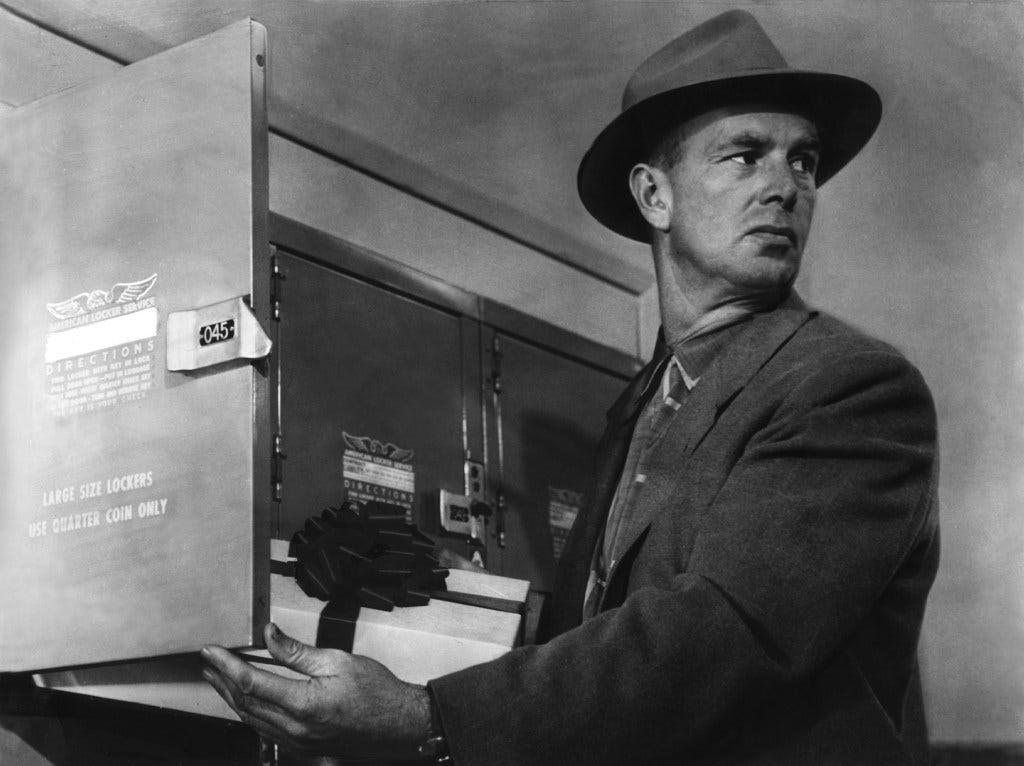
The rest of the cast--including Coleen Gray, Vince Edwards, Marie Windsor, Elisha Cook Jr., Jay C. Flippen and Timothy Carey--are all great as well, though none rising to the level of Hayden. Cook, Flippen, and Carey are all quite distinct and grab your attention. Carey in particular was quite distinctive in his role. Art Gilmore's narration gives the film a wholly distinctive feel, emphasizing the procedural nature of the film (perhaps owing to crime novel author Jim Thompson's work writing for the film). That narration is also useful and effective when it comes to laying out and grasping the non-linear narrative of the film.
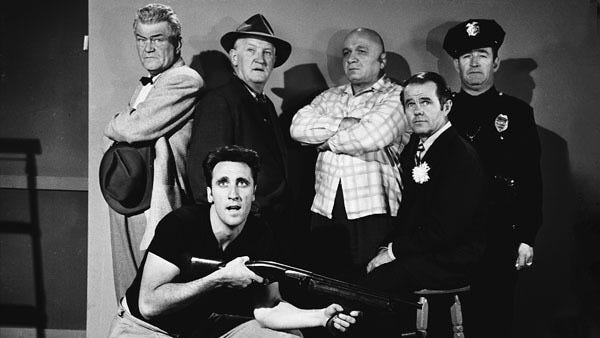
I'm trying to process, even as I write this, how the film fits within Kubrick's oeuvre and his thematic themes and concerns. Some of the play with narrative--fragmenting, non-linear--sort of plays out in his later films. I also think this is true, pulled from Haden Guest's essay for the Criterion Collection on the film:
[T]he idea of a secretly shared yet never fully understood plan, simultaneously motivating and systematically subverting the film’s narrative. Most often, this idea is expressed through characters who are steadily overwhelmed by obscure and at times fantastically intricate designs they have invented and/or are struggling to control—and that nevertheless refuse to be redirected or rationally understood.
The plan, the conspiracy, the crime... from Dr. Strangelove to Eyes Wide Shut you see that played out and engaged with. Yes, here's it's much more literal and direct, but you do see that engagement with a theme that would recur throughout his career. I did not notice any of the visual flourishes one would associate with Kubrick going forward present in The Killing. There were some distinctive visuals for a mid-century Hollywood film though. Amongst them, the closing shot caught my eye with the framing and the inside-outside setup (which calls to mind 2001).
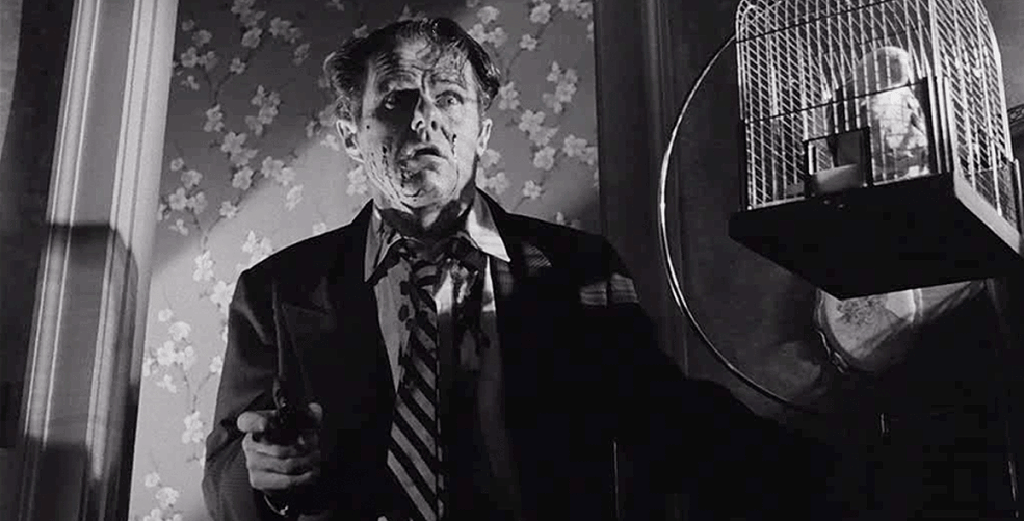
As I was watching, I could not help but think of Quentin Tarantino's breakout film Reservoir Dogs and the ways in which this film seemed to anticipate that later work. This is, of course, not really a great revelation as that film was alluded to in contemporary reviews of Reservoir Dogs and Tarantino himself was quoted as saying "I did think of it as my Killing, my take on that kind of heist movie." With all of the different stages and distractions going on to make the heist go through, The Killing also felt a bit like the Sodebergh Ocean's 11 film (though obviously much grittier). Also, given that Clay wears a clown mask to pull off the robbery, one's mind cannot help but go to the opening scene of The Dark Knight.
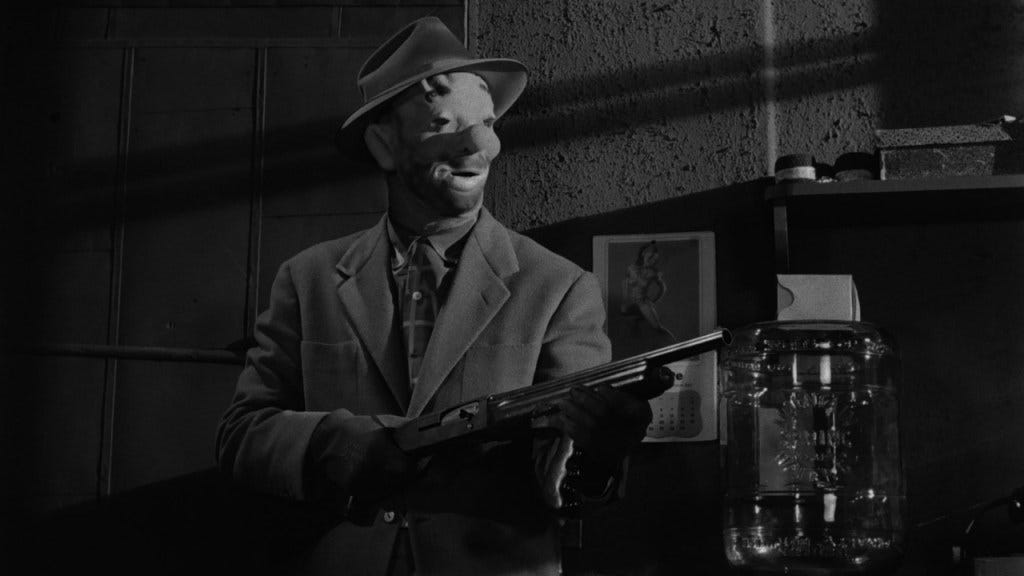
The Killing is an solid film, particularly as an example of the film noir style/genre, and hints at the possibility that existed within Stanley Kubrick that he would achieve and realize over the course of his career as one of the most important minds in cinema. There was still a ways to go (the Paths of Glory-Spartacus-Lolita sequence would help get him there), but for a director's first major/Hollywood film this is a worthy entry.