
"Besides, your hands ain't so clean"
Discussing the pre-code gangster classic, The Public Enemy

As I've discussed in a couple different posts, there have been these figures and icons in film history that I've come to somewhat in reverse. By that, I mean I knew "what they were" before seeing the actual thing. I talked about this a bit in regard to Dracula and The Phantom of the Opera, but it's not limited to that. When I think about the films of Jimmy Cagney, I think about an actor and performances that fall into that same kind of grouping.
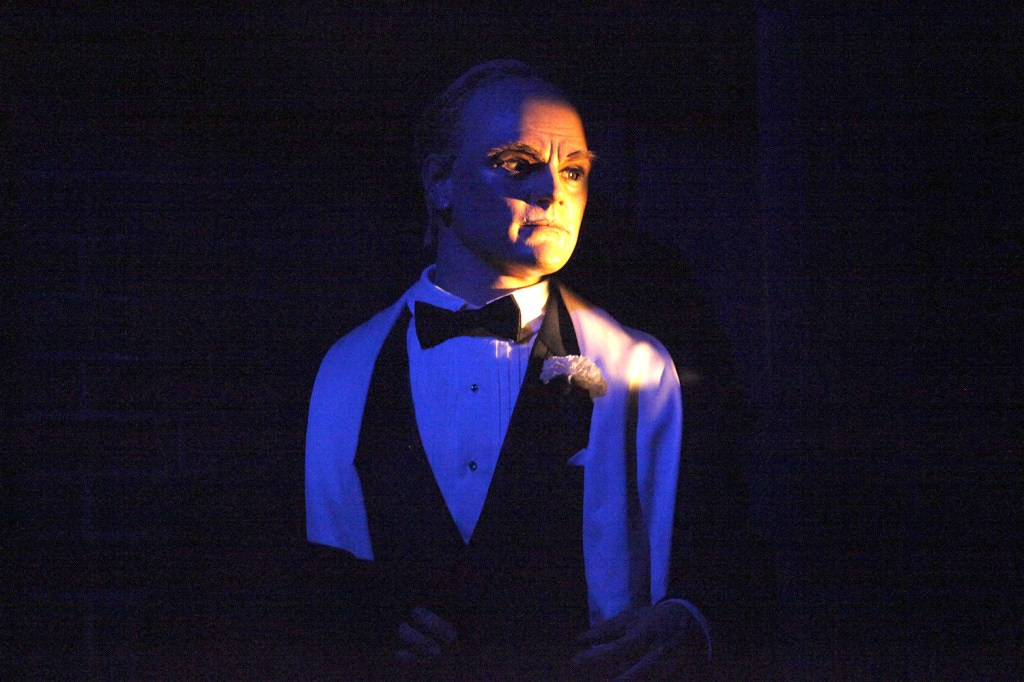
I was familiar with Cagney and his distinctive style and voice even before I ever actually watched him in a film, which was in White Heat. Again referencing the now-defunct Great Movie Ride at Disney Hollywood Studios, I remember seeing the trailer for Footlight Parade in the queue for that ride. But more importantly, I remember the animatronic version of Cagney that appears in the "gangster" section.
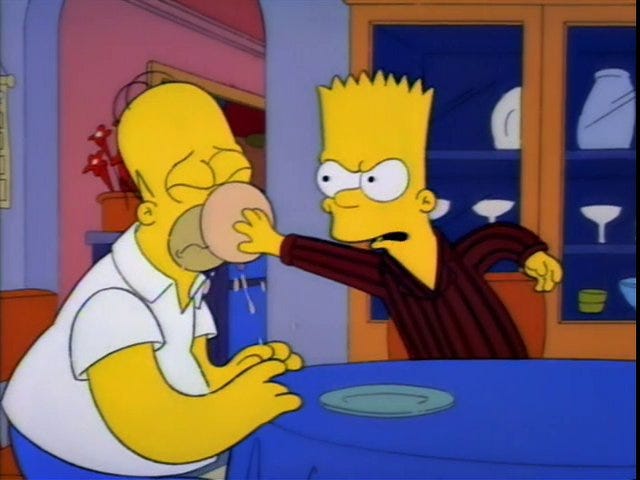
I decided, given that it is streaming on HBO Max and is on the shorter side, to watch Cagney's other famous gangster role (besides White Heat) in The Public Enemy. This pre-code Warner Brothers film directed by William Wellman stars Cagney, Jean Harlow, Edward Woods, and Joan Blondell. The synopsis of the film reads: An Irish-American street punk tries to make it big in the world of organized crime. Cagney plays that Irish-American, Tom Powers, who rises through the ranks. Cagney's performance in this film is, of course, iconic. You get the famous grapefruit-in-the face scene that would be endlessly referenced and parodied.
But beyond that iconic moment, Cagney's portrayal of Tom Powers clearly establishes his style as an actor--the fast talking, the almost nihilistic glee in the actions and trappings of the criminal life. I think a lot about this image, with Tom standing in the rain waiting outside to get revenge on the men who killed his friend and partner, Matt Doyle. The smile, that look, Cagney brings such an element of menace and force to the screen, which is perhaps shocking as he's definitely not a big guy (I found myself thinking a lot about Joe Pesci as I watched Cagney).
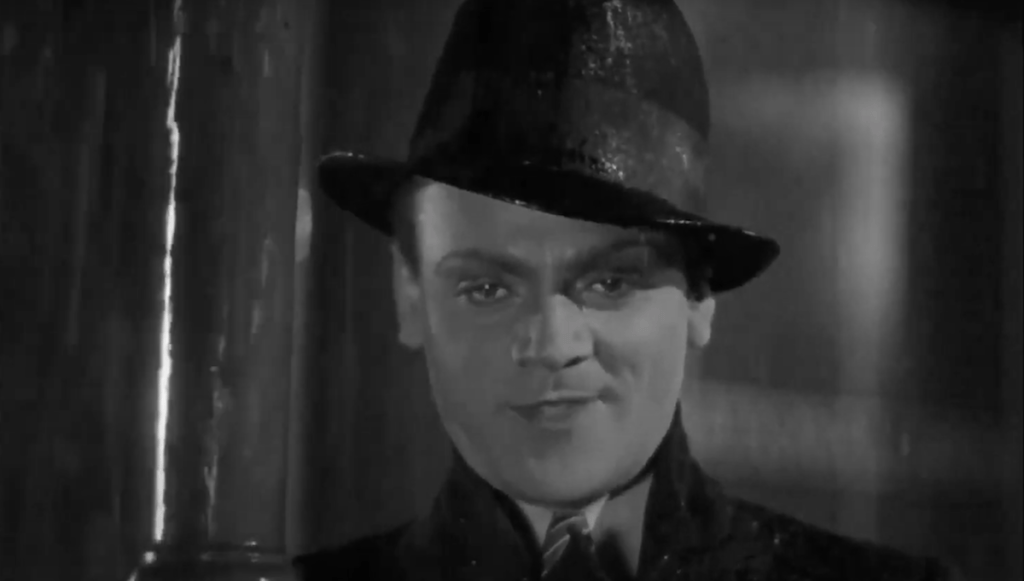
Seeing the younger Cagney too, compared with White Heat, is quite captivating too and you see what a spark he brought was quite striking.
What I also find fascinating about Cagney as an actor and the two films of his I've seen--this and White Heat--is all the stuff just below the surface. The true menace he seems to evince as well as the psychosexual questions lurking beneath the text of Cagney's performance. Much like White Heat, you get this very close relationship with a mother that encroaches upon the Oedipal. There's also the Jane character, Paddy Ryan's girlfriend, who takes advantage of a drunken Tom Powers, which is quite shocking to see in a film of the 1930s. It's not coming from the director or screenwriter, but rather it's just was Cagney brings to his performance.
Taking a look at the rest of the cast, Jean Harlow plays Gwen Allen, Tom's girlfriend. Though I knew who Jean Harlow was (again, thank you You Must Remember This), I don't know that I'd ever seen a movie she was in. But her hair is certainly a platinum blonde and she does bring a certain energy and charge to this film. I did think Donald Cook did a good job as Tom's brother who was on the straight and narrow. I do think they do something interesting with Tom's brother and perhaps hinting that he might not be as "good" as presented, or after he returns home from serving in World War I and chastises Tom for his links to organized crime:
Besides, your hands ain't so clean. You killed and liked it. You didn't get them medals for holding hands with them Germans.
Just adding something more interesting and challenging to the film than one would expect. Circling back to the transgressive nature of this film, the ending is somewhat shocking. After going in and killing the gang members who killed Matt, Tom is sent to the hospital to recuperate after suffering injuries of his own. Mike , Tom's brother, receives word that the rival gang has abducted Tom from the hospital but that they'll return him to his home. As his mother busily gets his room ready, there's a knock at the door, which Mike opens.
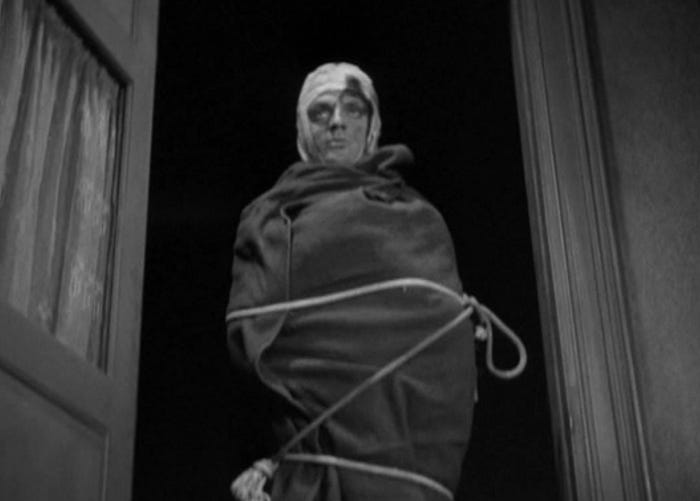
Tom's body then falls over, dead. It's such a grisly image, the dead stare of Tom standing there and then falling over. Mike then walks into the camera and out of frame as the shot stays on the doorframe where Tom's body lies. While I wasn't expecting any kind of "happy" ending for Tom (though this was before the implementation of the Hays code, it's still a film coming from Warners and thus with a certain morality to it), the ambiguity and the shocking visuals was quite powerful.
Having watched The Public Enemy, I can grasp how influential it was on the conception of the gangster film both in that Classic Hollywood moment and later. Cagney's performance in particular is what stood out, and one can grasp the way in which his portrayal and characterization of the gangster had such an outsized impact. I'm certainly glad I caught up with it and it helps to color my view of some of those modern-day gangster films.