
Universal Exports: Goldfinger
"No, Mr Bond. I expect you to die!"

It’s hard to overstate just how much of a cultural phenomenon Goldfinger, the third James Bond film, was. The film was where the Bond franchise became something more than just a sleek spy film series—it became a cultural force. It’s fascinating to think about it in its historical moment, specifically the British Invasion. 1964 was the high point of Beatlemania and The Rolling Stones were starting to come into their own as a band with a presence in the United States. Mary Poppins was in theaters becoming a cultural phenomenon. It’s hard not to see Goldfinger in that context—as another British cultural export that seized the American imagination.
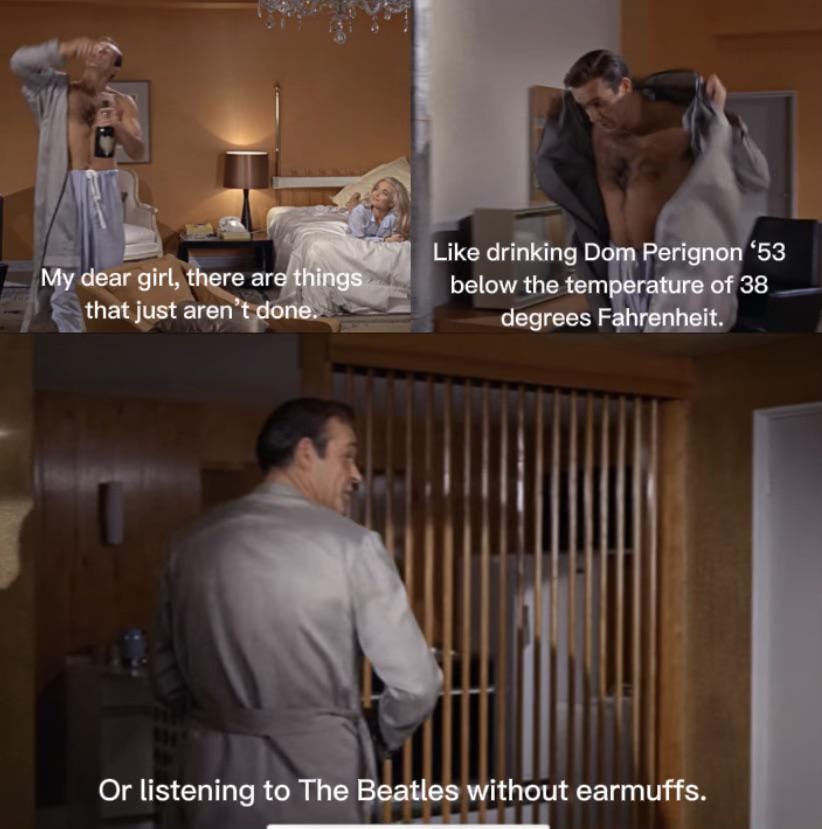
I also think about what was to come on television with the Adam West Batman television show in 1966 and Goldfinger’s success as anticipating that in some ways. But the story of Goldfinger’s importance has a lot to do with when it was released and the climate it capitalized upon. Because, in many ways, Goldfinger is a bit of an outlier with where the franchise would go and thus its status as one of the “Mount Rushmore” James Bond films occasionally puzzles the viewer.
The plot of Goldfinger centers on Bond’s investigation into the affairs of Auric Goldfinger. Goldfinger, as his name suggests, is obsessed with gold and a smuggler of the metal. After some back and forth investigation (due to MI6 wondering about Goldfinger’s gold smuggling in Europe), Bond ultimately discovers Goldfinger’s master plan to irradiate the gold in Fort Knox with a nuclear weapon, which will both increase the value of his gold supply while also creating economic instability in the United States in return for the Chinese government supplying the weapon.
Something I found interesting is that this film, unlike the first two, does not involve or mention SPECTRE. I do wonder if the more stand-alone nature of the plot helped in some way with it translating and capturing an audience. I mean, I don’t think that the lore was so dense compared to the interconnected universes we have in modern-day movies, but it’s still in play.
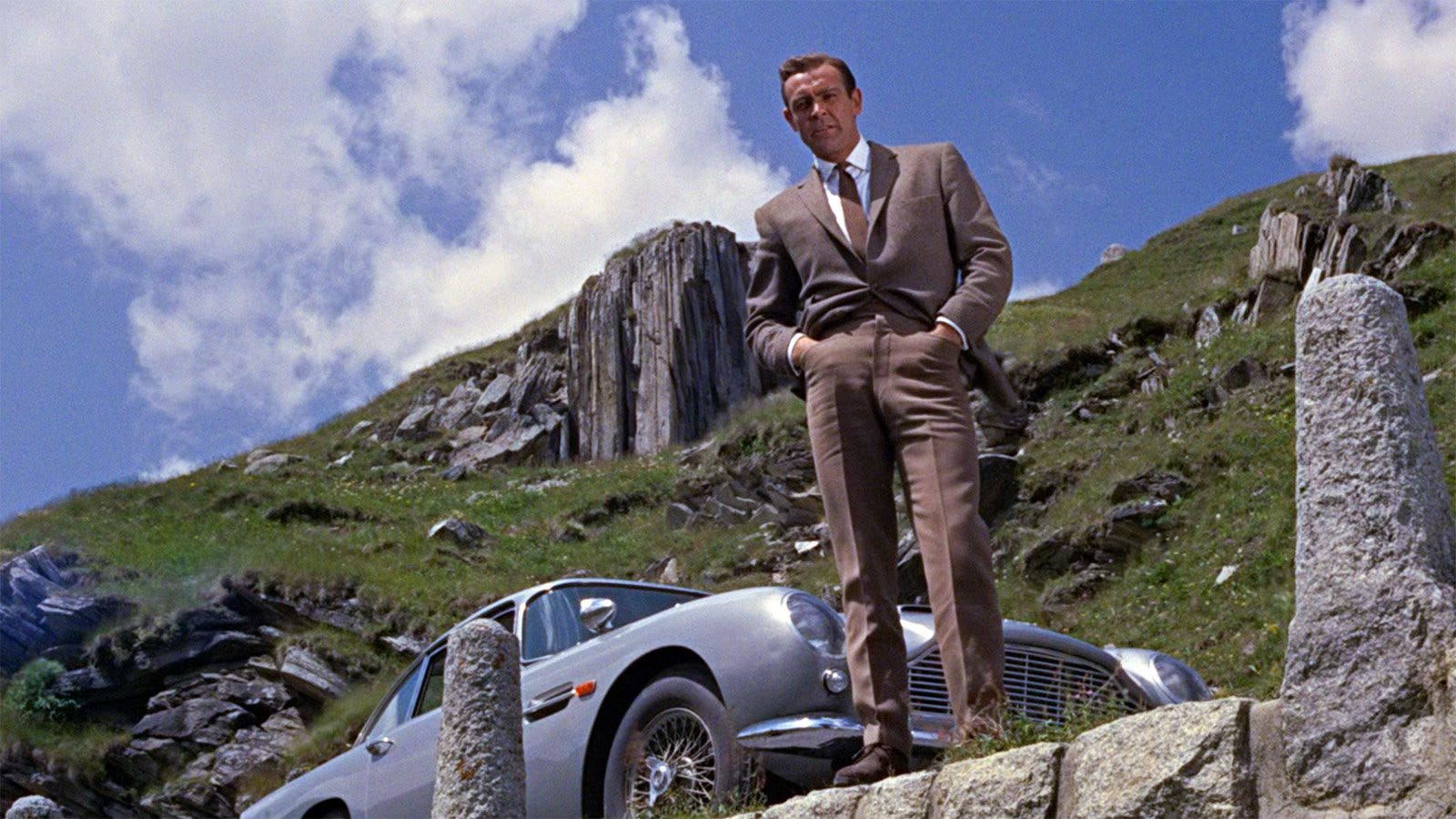
While I end up being not quite as high on the film in a way that contradicts the predominant critical appraisal of the film, I do think Goldfinger is Sean Connery’s best performance as Bond. He builds on what he did well in From Russia With Love, but adds even more charisma and charm. I also have to give a shoutout to a couple of amazing ensembles that Connery wears to perfection.
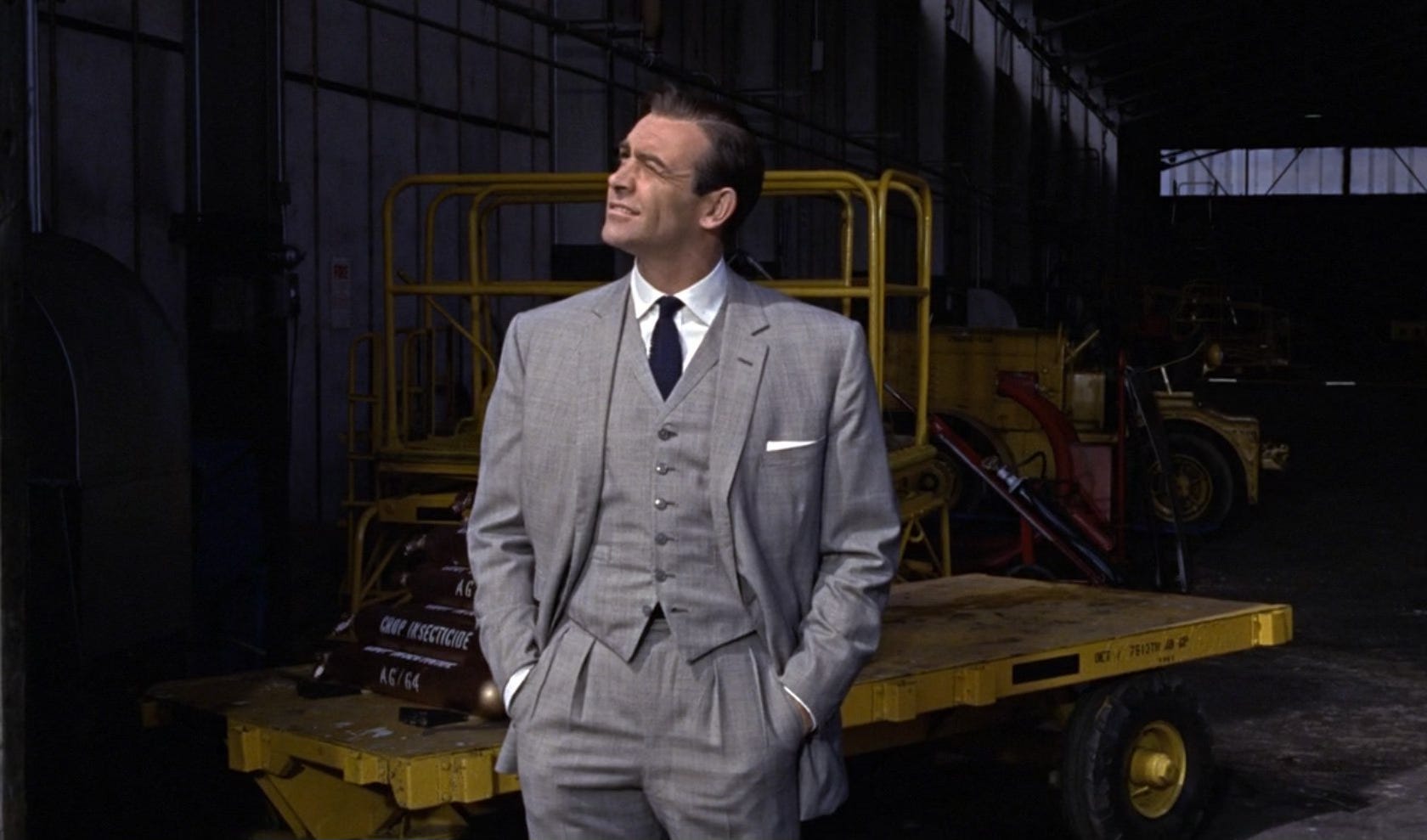
This three-piece glen plaid suit is unbelievable, as is this look from his following of Goldfinger back to Switzerland:
And we can’t forget this classic look from the pre-credits sequence:
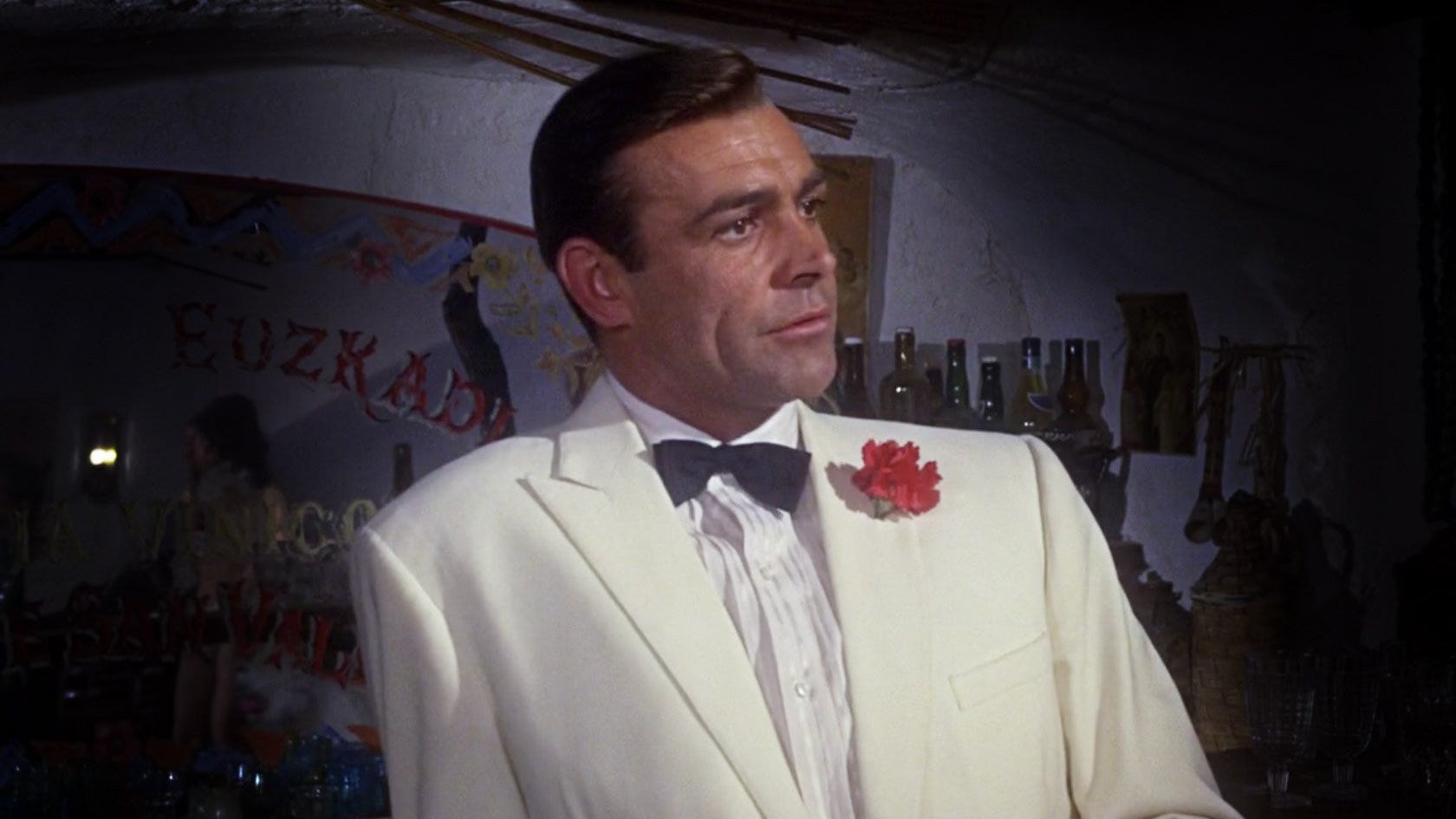
Bond’s fashion in this films is impeccable—looks I either emulate or aspire to. In terms of what we think of when we think of James Bond, Connery’s portrayal in Goldfinger gives us a large part of it.
Bond’s foiling of Goldfinger’s plan comes with the aid of his personal pilot, played by Honor Blackman. Blackman’s pilot, infamously named Pussy Galore, is portrayed with more agency than earlier Bond women. She’s skilled, independent, and willing to push back against Bond. Yet her quick turn toward him, coupled with the infamous barn scene and her name itself, make aspects of the portrayal deeply dated. In addition to Ms. Galore, there are also the Mastersons—Jill, who is Goldfinger’s assistant and is infamously murdewred by being painted completely in gold and suffocating; and Tilly, Jill’s sister who seeks revenge on Goldfinger but is ultimately killed by Goldfinger’s muscle, Oddjob. I might argue that Oddjob is more memorable in his villainy than Goldfinger himself as he feels so detached from the actual action. Compared with Grant and Klebb in From Russia with Love and Largo in the upcoming Thunderball, it just doesn’t have that level of menace and fear.
Oddjob kills Tilly using his steel-brimmed razor sharp bowler hat, one of the famous aspects of this film. So many of the film’s accoutrements are what lasted. Oddjob’s hat, the laser Goldfinger uses (“Do you expect me to talk?” “No, Mr. Bond. I expect you to die!”), Q and the famous Aston Martin DB5 complete with ejector seat (“Ejector seat, you must be joking.” “I never joke about my work, 007.”). You also get the first pre-credits sequence with Bond that’s divorced from the main plot but sets the tone for the rest of the film. There’s so many of these little touches and things that have become so engrained into the Bond formula that Goldfinger feels like this particularly representative film. But you remember much of the film unfolds in Kentucky, a setting that feels oddly confined. Even the European sequences lack the sweeping glamour of From Russia With Love’s globe-trotting, making Goldfinger feel unusually contained for a Bond adventure.
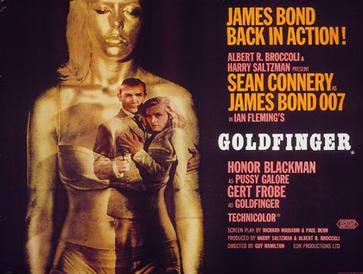
I find it hard to get to exactly what I think about Goldfinger. I think it’s a very important film in the Bond franchise and finished the establishment of what these films would be like/what we could expect as viewers. But compared to the other Connery outings surrounding it, it feels so confined and not as… glamorous? worldly? that I wonder how it can have such an outsized legacy. And yet, I know and can see how important and influential it is. I think that’s why, at the outset, I talked about the film in its historical context. That’s at least part of why it caught on to such a great degree, I think, and that’s led to its position of high esteem. I’m not even saying it’s one of the lower-tier Bond films! It’s right up there! But I think understanding it in that historical context, and how important it was to its moment in time, is how we grasp why Goldfinger is so important.