
"New Amsterdam"
"New York City is a marvelous machine filled with a mesh of levers and gears and springs, like a fine watch wound tight."

Talking about this Pete-centric episode that gets us thinking about legacy, names, and power.
The Pitch: “We gave you everything, we gave you your name.”
It may seem strange to frame Pete Campbell—a man of privilege—as an aspirant. But this episode makes clear that Pete wants, needs, to feel like someone who has some kind of power and meaning in a world that (seemingly) denies him that. We come to understand why this sensibility clashes so much with Don, but that understanding comes later in the season.
From both his parents and his in-laws, Pete sees his work diminished in some way. For Trudy’s parents (also, we get our first appearance of the great Alison Brie as Trudy Campbell), that’s not a bad thing—Trudy’s father, Tom Vogel, is clearly jealous of Pete’s life as an ad man, but he also does not seem to take Pete seriously.
For Pete’s parents, who are the bluest of the blue bloods, Pete’s job is a source of embarrassment. It’s “no job for a white man” as Pete’s father dismissively says. Pete’s father sees his son’s work as an accounts man, the work he does with clients for his agency is beneath real work There’s this clear sense amongst the Campbells that Pete has somehow let the family down with what he did. When Pete says to his father that they’ve never given him anything (as he asked about helping with a down payment on an apartment), his father says “We gave you everything, we gave you your name. And what have you done with it?” I do think it’s interesting we have no sense of what exactly Pete’s father does (or did), which makes him seem right out of the “old money” world that Fitzgerald depicts with the Buchannans in The Great Gatsby.
Out of this feeling of powerlessness, that most of what Pete does “have” is based on who his parents are, Pete clashes a great deal with Don in this episode involving the Bethelem Steel work as a way of asserting some kind of control.
Pete takes Don’s admonition, “You do your job […] leave the ideas to me,” and goes the other way, pitching his own ideas to Bethlehem Steel away from the office. Pete wants to feel important, like he can generate something (in this case, an idea for a campaign). As he says to Don:
I have good ideas. In fact, I used to carry around a notebook and pen just to keep track. Direct marketing. I thought of that. Turned out it already existed, but I arrived at it independently. And then I come to this place, and you people tell me I’m good with people, which is strange because I’d never heard that before.
The humor associated with Pete boasting about coming up with an idea that already existed aside, you see that Pete desires to be that creator, that generator, mainly because of the importance that would be bestowed upon him through creation. Thus, we get Pete pushing his own ideas to the Bethlehem Steel representative while entertaining him in New York. This act, along with Pete’s snide sense of entitlement when the client gravitates toward his ideas, leads Don to call for Pete’s firing.
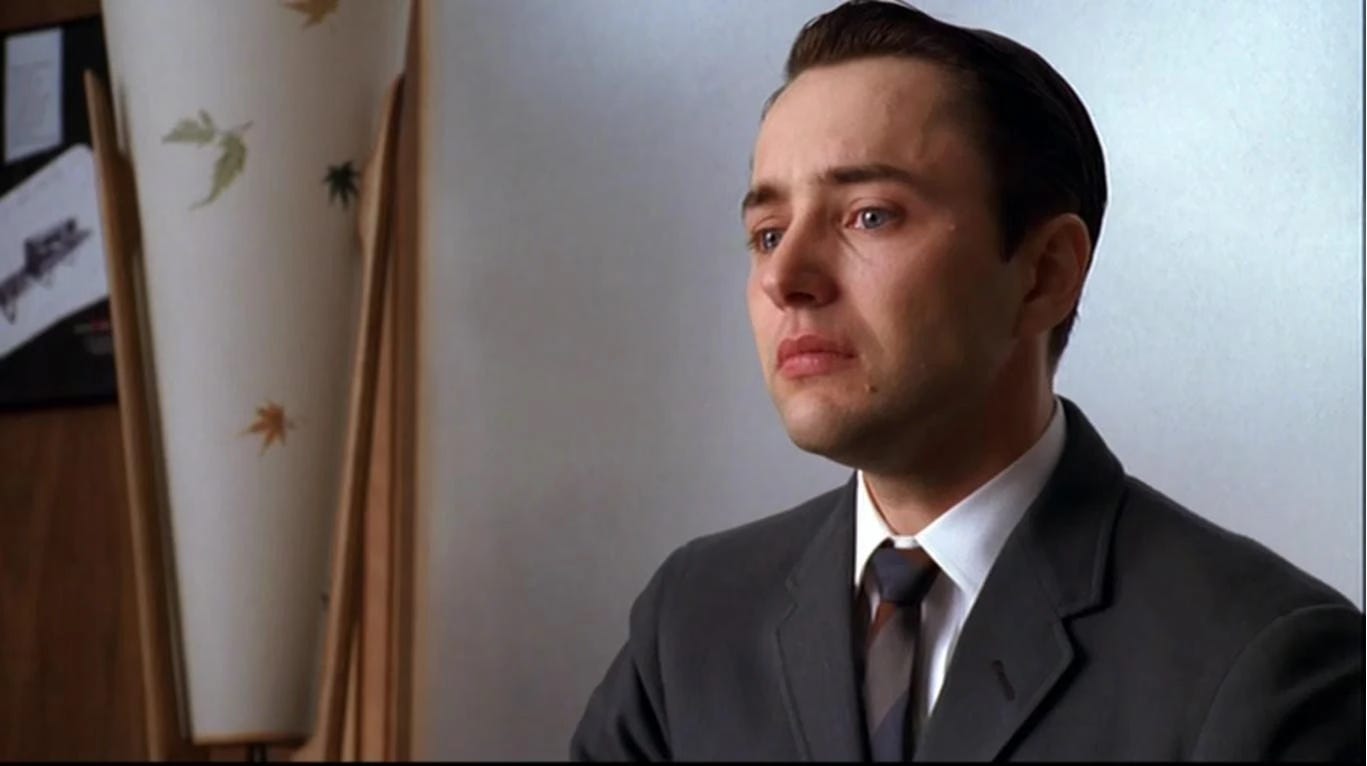
But as Don and Roger go into Cooper’s office to finalize the termination, Cooper makes it clear that Pete needs to stay and not because of what he can do. It is because of Pete’s mother’s family (and their name, not even their fortune for as Cooper noted they dropped it all in 1929) and Cooper’s desire to not have their agency talked about in a negative manner in the places of prestige and power in New York that Pete must stay. Cooper both makes it clear that he does not think much of this and of Pete’s family (saying of their willingness to drop their fortune in fear of what was to come, “Some people have no confidence in this country”), but also understands how the “game” is played in this world.
It’s not because of anything Pete does or can do, but rather his name (in this case, his mother’s maiden name Dyckman, and what comes along with it) that saves him. But while that saves Pete’s job, it leaves him feeling trapped. As Pete looks out the window of the apartment he and Trudy bought (with help from Trudy’s parents, and not Pete’s), you get this sense that Pete feels stuck in this space where his only contribution is his name (emphasized by the fact that one of the Campbell’s new neighbors is so excited to be living next to someone from the Dyckman family). As he gazes out onto the New York night, Ella Fitzgerald’s version of “Manhattan” plays.
New Business
Though Bethlehem Steel really only makes its appearance in this episode, I do very much enjoy the rank hypocrisy of this client, Walter. In their first meeting, Walter clearly positions himself as an outsider, “I’m not from a city, they just bother me,” but then we see him out with Pete as part of this trip and joined by two call girls.
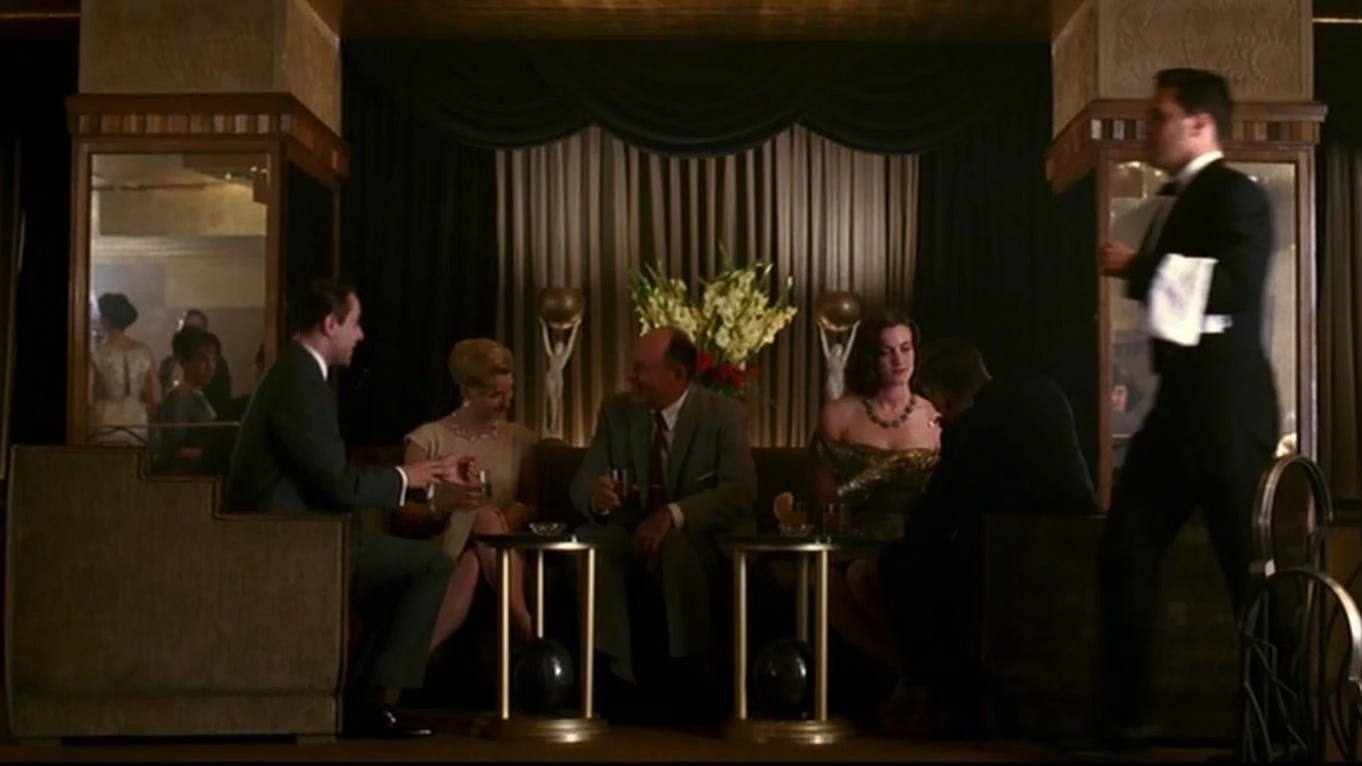
It feels so shocking and yet gives you a (further) sense of the world of compromised value in which we find ourselves.
The Traffic Meeting
The Betty-Helen Bishop dynamic continues to evolve—we have the encounter with Helen’s ex-husband, standing outside Helen’s home trying to see their child, followed by Helen coming over and talking to Betty about that situation. Again, the moment when Don comes home and sees Helen sitting with Betty… I find myself wishing there’d been some kind of further interaction between Helen and Don. I also enjoy that Helen is a Kennedy supporter and tries to get Betty’s support, with Betty saying “I’m not sure who we’re voting for.”
You also get the strange beginning of the Betty-Glen Bishop interactions, with Glen coming into the bathroom when Betty is using it and then Glen asking for a lock of Betty’s hair. I cannot overstate how awkward it is when Glen opens the door while Betty is using the bathroom (“young man, what is wrong with you”), but there is something interesting about this relationship between the two of them. It feels, appropriately enough, Salinger-esque.
The Grey-Flannel Suit
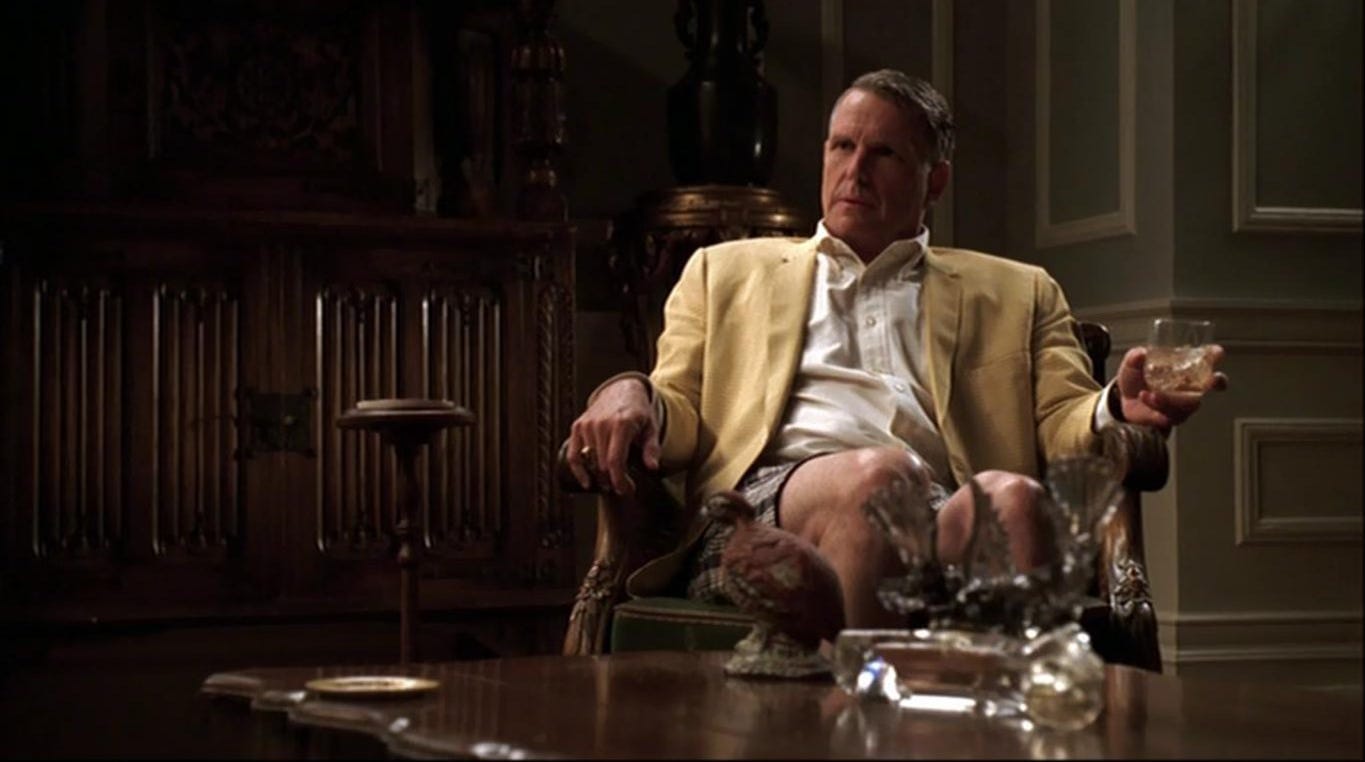
He seems absolutely terrible, but I love Pete’s father’s madras shorts.
The Five-Forty-Eight
You get the quick appearance of Rachel Menken in the episode, with Don clearly going out of his way to “run into” her as she comes from a meeting with Sterling-Cooper. She’s dressed in black and replies to Don saying it doesn’t have to be this way with “We both know how we’d like it to be”
One of Roger’s greatest lines: “I bet there were people in the Bible walking around complaining about kids today.”
Some more Gold from Sterling: “I bet daily friendship with that bottle attracts more people to advertising than any salary you can dream of […] You don’t know how to drink, your whole generation. You drink for the wrong reasons. My generation, we drink because it’s good. Because it feels better than unbuttoning your collar. Because we deserve it.”